TLDR
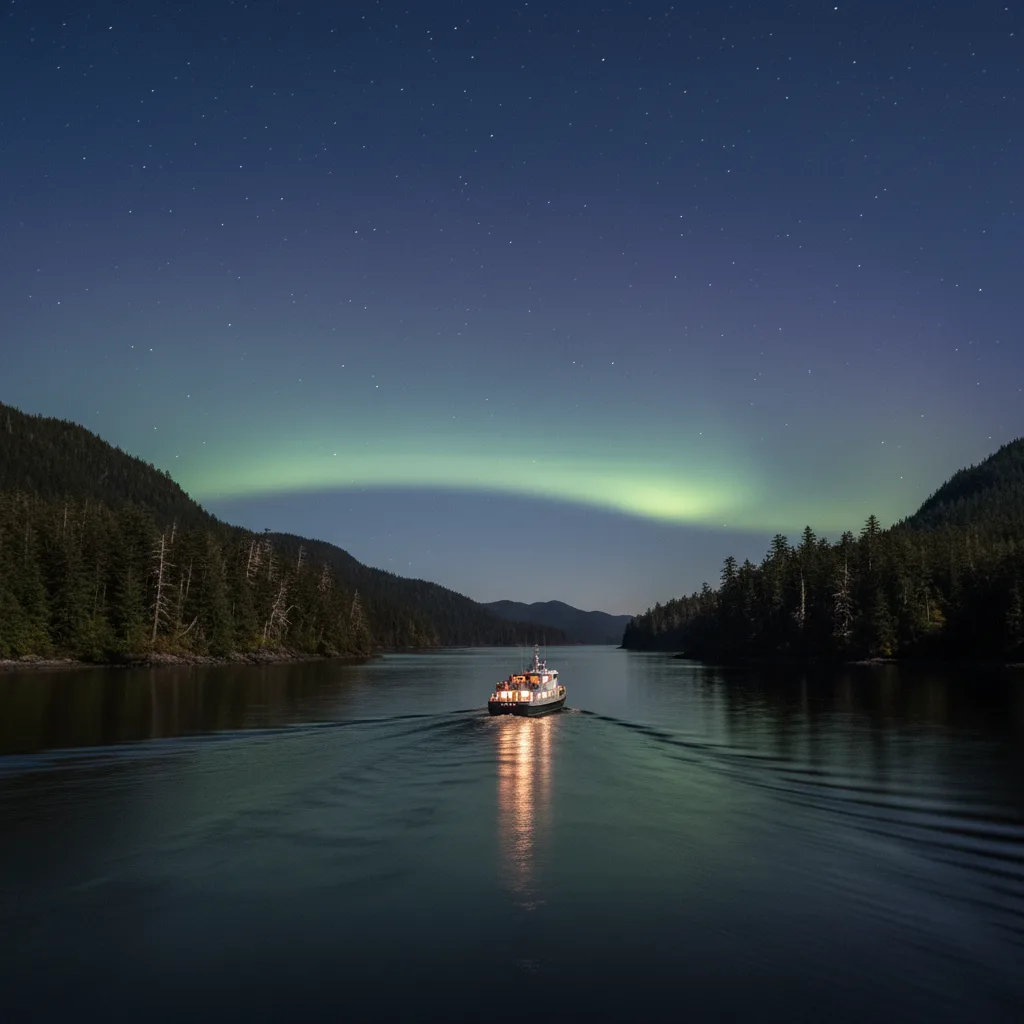
A northern lights Alaska cruise can work but only in a narrow window. Almost all Alaska cruises run May through mid-September, which is before the aurora season opens in the interior. A handful of late-September departures and some repositioning cruises overlap early aurora viewing, and a small-ship cruise through the Inside Passage in late September is your best bet if you want ship-based aurora on the itinerary. If the aurora is the reason for the trip, do not book a cruise. Fly to Fairbanks.
Insider Tip
If a cruise line is marketing “northern lights viewing” on a June or July sailing, walk away. The sky does not get dark enough above 55 degrees north during those months. You are paying for marketing, not for a real chance at the aurora.
The question of whether a northern lights Alaska cruise works is simpler than the marketing makes it sound. The aurora needs two things: a functioning auroral oval, which is constant, and a dark sky, which is seasonal. Cruise season in Alaska and aurora season in Alaska overlap only in a narrow shoulder. This post walks through which cruises can deliver aurora viewing, which cannot, and what you are actually signing up for.
Why most Alaska cruises cannot deliver aurora
The main Alaska cruise season runs roughly May through mid-September. Most itineraries sail the Inside Passage from Seattle or Vancouver to Juneau, Skagway, and Ketchikan, or loop round-trip out of Seattle. A smaller number of “one-way” or “Gulf of Alaska” cruises connect Vancouver or Seattle with Whittier or Seward, north of the Inside Passage.
Two things make aurora viewing hard on a cruise. First, the season mismatch. From May through the third week of August, Southeast Alaska nights are not dark enough for the aurora to be visible, even when it is active overhead. The first genuinely dark late-night skies in Juneau and Ketchikan appear in the last week of August. Second, the latitude. Southeast Alaska cruise stops sit at roughly 55 to 59 degrees north, which is south of the typical auroral oval. Aurora shows from a ship in the Inside Passage tend to sit low on the northern horizon rather than overhead, and they require a geomagnetic storm of Kp 5 or higher to be impressive.
Light pollution on the ship itself is the third problem. Large cruise ships are lit up from bow to stern. Even on a cloudless late-September night, standing on deck with 3,000 passengers and full deck lighting is not a viable aurora viewing environment. Smaller expedition ships that kill the exterior lights on request do better.
The cruises that actually overlap aurora season
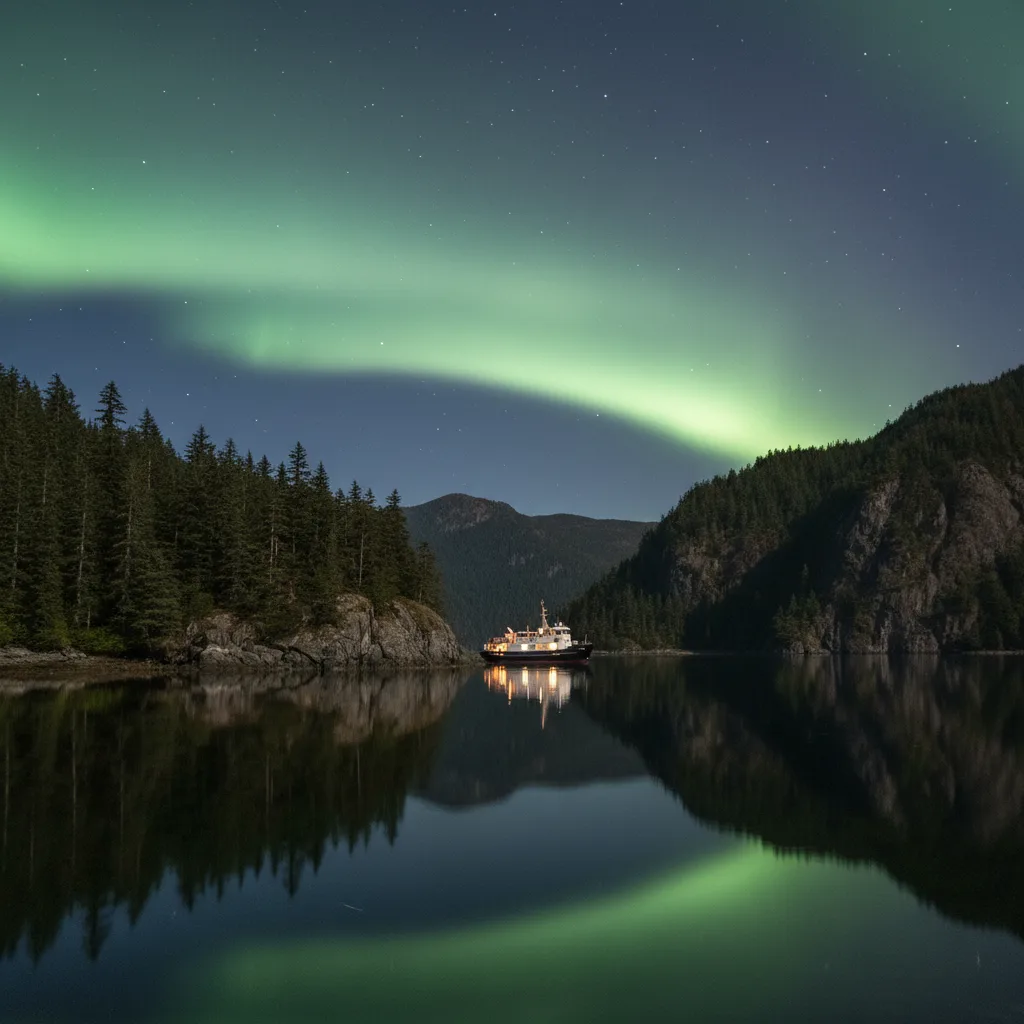

A handful of cruise options do sit inside the early aurora window:
- Late-September small-ship Inside Passage cruises. Several expedition operators run final season departures in the last two weeks of September. Nights are already dark enough at Juneau latitude by then, and Kp 4 or higher with clear skies will produce a visible aurora on the northern horizon. These are the most practical cruise aurora trips. Expect 40 to 100 passenger ships, small-vessel anchorages, and genuinely dark nights.
- September repositioning cruises. When the main season ends, many larger cruise ships sail south from Alaska to Hawaii, California, or Panama. The first two or three nights of those repositioning sailings may overlap the start of usable dark hours at Ketchikan latitude. This is aurora as a potential bonus, not as the purpose of the trip.
- “Northern lights cruise” charters out of Seattle or Vancouver, late season. A small number of specialty operators market dedicated aurora-themed fall Inside Passage sailings. These exist and some deliver, but do your due diligence. Verify the departure date is after September 15, confirm the ship has a dark-sky viewing policy, and check whether the itinerary actually sits above 57 degrees north for the overnight hours.
What does not work: any June, July, or early-August cruise, any large ship where you cannot escape deck lighting, and any itinerary that spends its nights in port (because port lighting washes out even a strong display).
The honest alternative: fly to Fairbanks
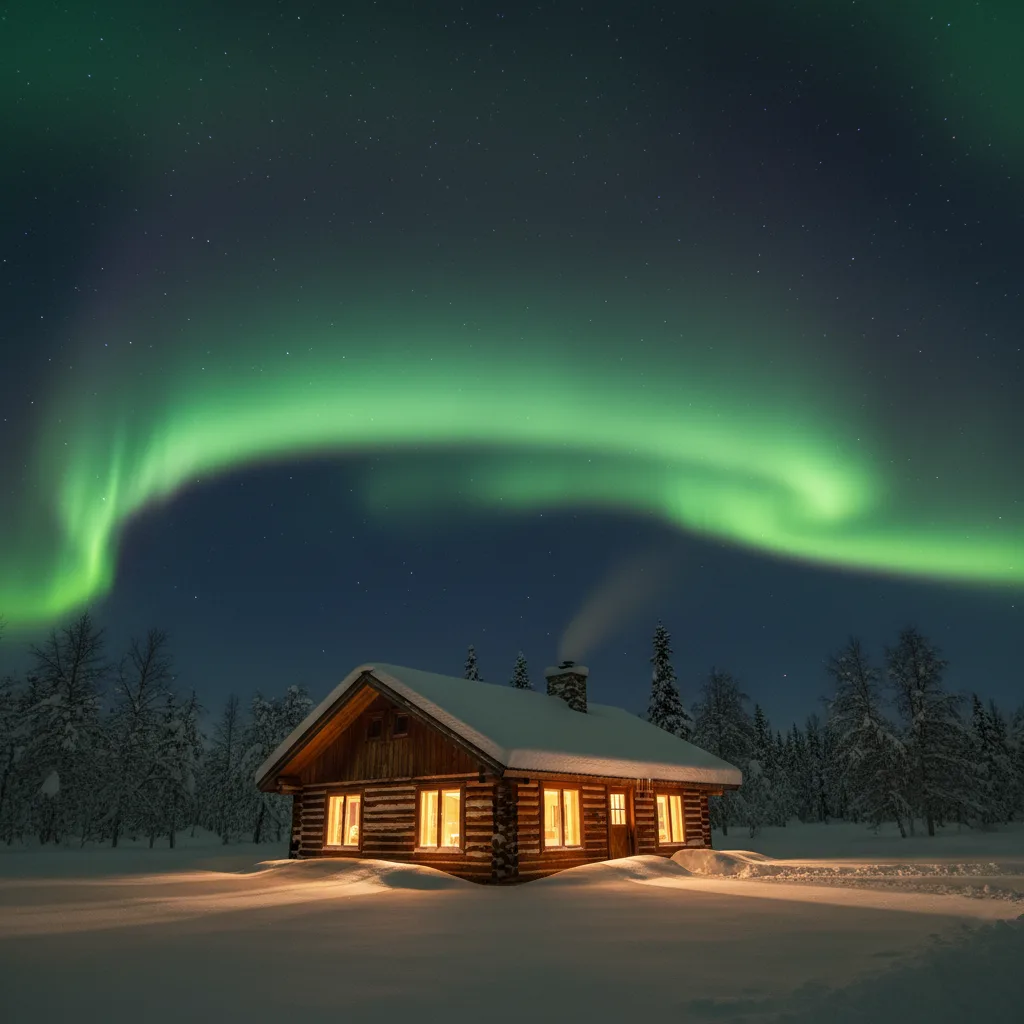
If the northern lights are the reason you are considering Alaska, a cruise is an expensive and low-probability way to do it. The same budget, roughly $3,000 to $5,000 per person for a week-long cruise, buys a direct aurora trip with significantly better odds. A five-night package built around three Fairbanks nights, one Chena Hot Springs night, and one Denali transit night runs $2,000 to $3,500 per person including domestic flights from Seattle, rental car, and lodging.
Fairbanks delivers roughly a 90 percent chance of seeing the aurora on any three-night stay in season. Chena Hot Springs Resort has an on-site Aurora Observation Point you can reach by Snowcoach. Borealis Basecamp has glass-roof igloos built specifically for watching the sky from bed. If you want the hybrid experience of a scenic travel day and aurora, add the Alaska Railroad Denali Star, which runs a reduced winter schedule year-round between Anchorage and Fairbanks. See our aurora trip theme page for the current lodge picks.
The cruise shape works for the traveler who wants the glacier calving, the Inside Passage scenery, and the wildlife of summer Alaska, and who is willing to take a small chance at a horizon-hugging aurora on a specific late-season sailing. It does not work as a primary aurora strategy.
Looking for aurora lodging instead?
See our land-based aurora lodges across Fairbanks, Chena Hot Springs, and the Arctic Circle for the full mid-September through March season.
See aurora lodgesFAQs
Can you see the northern lights on an Alaska cruise?
Only on a late-September small-ship sailing, and even then it depends on weather and geomagnetic activity. Cruises in June, July, and early August run during the aurora off-season and cannot deliver viewing regardless of marketing claims.
What is the best Alaska cruise for the northern lights?
A small-ship expedition cruise through the Inside Passage departing after September 15. Aurora-themed fall charters out of Seattle or Vancouver exist but verify the departure date, dark-sky viewing policy, and overnight latitude before booking.
How likely are you to see the aurora on a cruise?
Much less likely than on a land-based Fairbanks trip. Even a late-September Inside Passage cruise puts you at 55 to 59 degrees north, south of the auroral oval, and ship lighting reduces visibility. Fairbanks at 64 degrees north delivers roughly 90 percent odds on a three-night stay.
Why do cruise lines advertise northern lights viewing in summer?
Marketing. The aurora is physically present year-round but invisible during the bright summer nights of the Alaska cruise season. Some operators use the phrase loosely to mean “you might see something,” which rarely delivers.
Can I combine a summer cruise with an aurora trip?
Not in the same week. Your best option is to book a summer cruise for the Inside Passage, Denali, or Kenai Fjords experiences and return for a separate March or late-September aurora trip based out of Fairbanks.
What should I expect to spend on an aurora trip versus a cruise?
A five-night Fairbanks aurora package with domestic flights from Seattle runs roughly $2,000 to $3,500 per person. A week-long Alaska cruise runs roughly $3,000 to $5,000 per person including flights. The aurora trip gives you much better odds and a purpose-built itinerary.