
TLDR
Alaska has a small number of purpose-built glass igloo properties for aurora viewing. Borealis Basecamp near Fairbanks is the main one, with clear fiberglass domes and a newer set of aurora viewing cubes. Expect roughly $500 to $900 per night in high season. These work best as a one or two-night splurge inside a longer aurora trip, not as the whole trip. For the same spend, A Taste of Alaska Lodge or Aurora Pointe-adjacent cabin rentals deliver comparable dark-sky viewing at less cost.
Insider Tip
Book the glass igloo for one night of your aurora trip, not all three. The experience of watching the sky from bed is the sell, but most guests end up stepping outside anyway because the full sky view is only possible from a 360-degree unobstructed spot. One night gets you the photograph and the story. Three nights is overspending.
The glass igloo has become the iconic image of a northern lights trip, mostly thanks to Finnish Lapland marketing. Alaska has a smaller but real version of the same thing. This guide walks through the actual properties, what the experience is like in practice, and whether it should be the whole trip or one night of a wider itinerary.
Borealis Basecamp: the main Alaska glass igloo property
Borealis Basecamp sits on a forested ridge at 2640 Himalaya Rd, about an hour from Fairbanks International Airport. It is the single best-known glass-roof property in Alaska and currently runs 4.4 out of 5 on 547 Google reviews. The property has two kinds of accommodation. The original 20 clear-roof fiberglass igloos are half-dome structures with a transparent upper half, warm interior, heated floors, and a private bathroom. The newer aurora viewing cubes are rectangular glass-ceiling rooms added in the last two years to meet demand.
What the experience is actually like: the clear roof gives you a view of roughly two-thirds of the sky from bed. On an active aurora night you can watch the arc pass overhead without leaving the room. The heated floors and good insulation mean you can keep the interior warm at very low outdoor temperatures. Meals are served in the main lodge, and the property runs a nightly aurora wake-up service on active evenings so you are not sleeping through a display.
What it does not do: the clear roof does not give a full 360-degree sky view. If the aurora is in the northern horizon, you still need to step outside to see it clearly. The walk from igloo to main lodge in minus 20 weather is longer than it sounds on a website. And the rate for a busy-season weekend in March can run $700 to $900 per night, significantly above standard Fairbanks-area lodging.
Book if: you want one or two memorable nights as part of a longer trip, or you want the specific experience of falling asleep looking at the aurora. Skip if: you need reliable walking access to restaurants, you want a single-property long stay, or you are budget-constrained.
Cabin and lodge alternatives with the same viewing
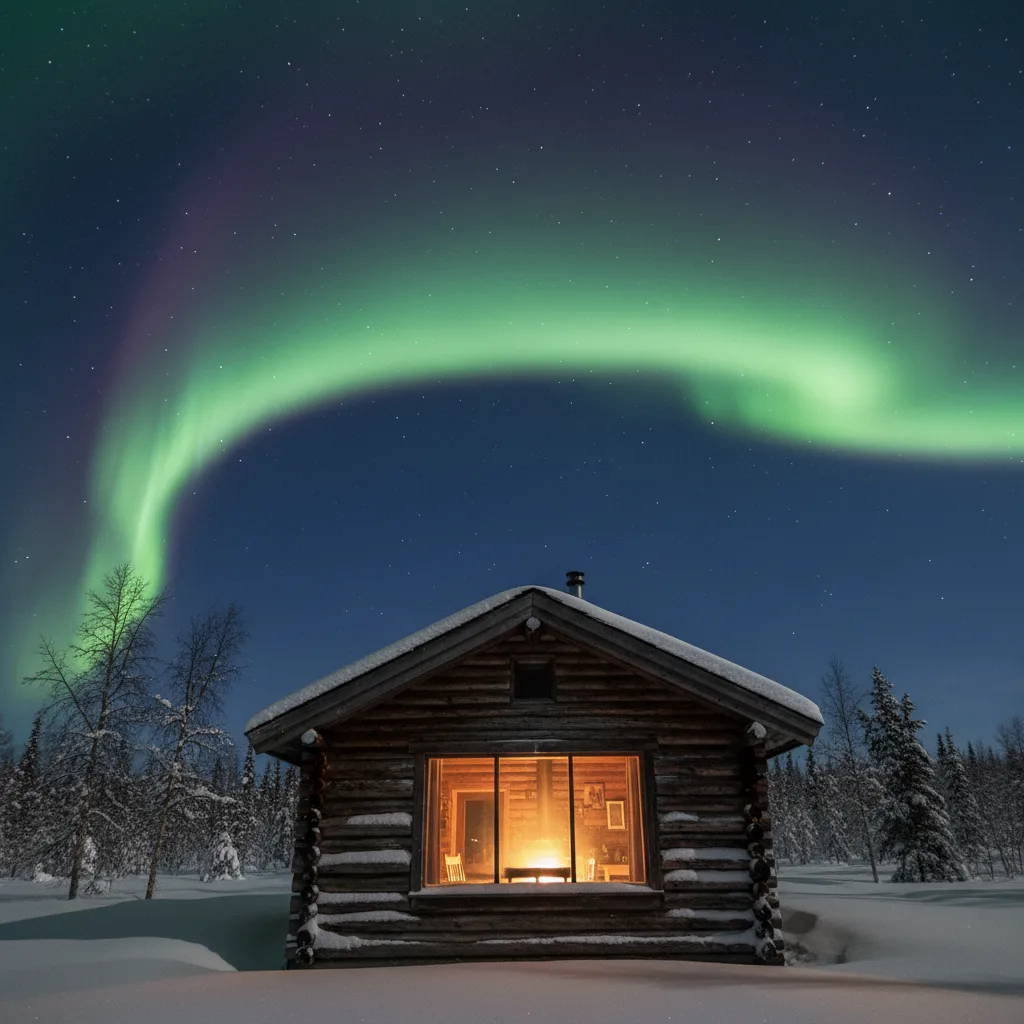

Several Fairbanks-area properties offer comparable dark-sky viewing without the glass roof premium. Rooms are conventional but you walk out the door onto an aurora-capable dark pad.
- A Taste of Alaska Lodge (551 Eberhardt Rd, 4.9 / 139). A 280-acre property outside Fairbanks where the rooms have big picture windows and wildlife is a regular draw. Rates typically run $300 to $500 per night in peak season. The views from the property include Denali on clear days. One of the highest-rated aurora-oriented properties in the area.
- Aurora Villa (1110 John Kalinas Rd, 4.0 / 79). A smaller guesthouse with rooms designed for quick outdoor access and a dedicated viewing deck. Good value for a mid-range aurora trip.
- Pike’s Waterfront Lodge (1850 Hoselton Rd, 4.4 / 1,327). On the Chena River in town, this is the polished hotel option. Aurora viewing means a 15 to 20 minute drive out to Murphy Dome or Cleary Summit, so you trade location for amenities.
- Chena Hot Springs Resort (17600 Chena Hot Springs Rd, 4.2 / 5,723). The hot springs plus aurora combination 60 miles out of Fairbanks. Rooms are rustic and the cabins sit on the edge of the Chena River State Recreation Area with open northern sky.
- Pleasant Acres Reindeer Ranch (464 Cory Ranch Rd, 4.8 / 99). A working reindeer ranch with guest accommodations where you can combine the aurora with a daytime farm visit.
Our full Fairbanks area lodge picks cover the rest of the range.
The Arctic Circle option: Iniakuk and fly-in lodges
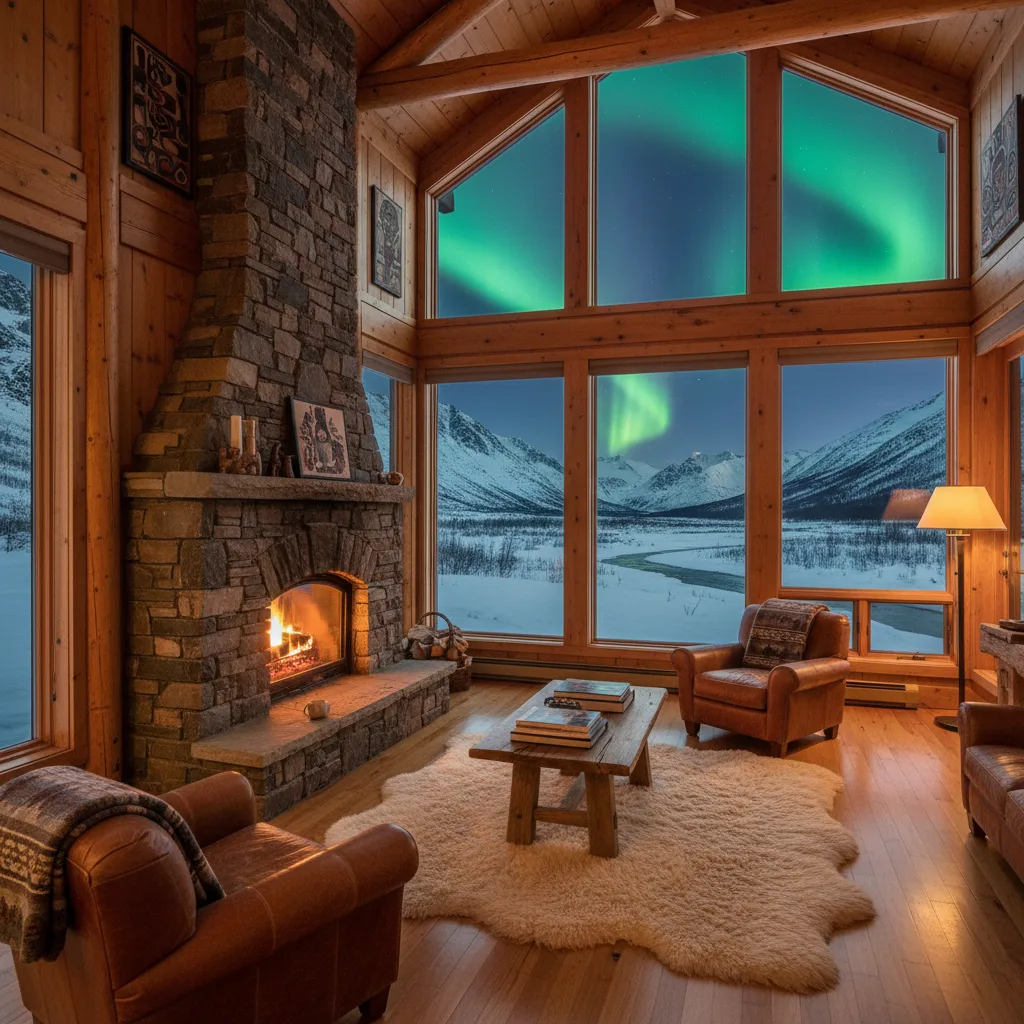
North of Fairbanks the aurora viewing infrastructure shifts from glass igloos to wilderness lodges with very large windows. These are fly-in properties in Gates of the Arctic National Park and the Brooks Range. Rates run $600 to $1,400 per person per night all-inclusive.
- Iniakuk Lake Wilderness Lodge, 200 miles north of Fairbanks and 60 miles above the Arctic Circle in Gates of the Arctic. Fly-in from Bettles. The lodge takes one group at a time, and the main building plus cabins all use oversized picture windows. You do not get a glass roof, but you get a genuinely remote sky with no competing light source in any direction.
- Arctic Hive Retreats, about 63 miles above the Arctic Circle. An off-grid wellness retreat with yurt and lodge accommodation, wood stoves, and a sauna. The viewing is on a cleared pad with a fire pit rather than through a roof.
- Bettles Lodge, a historic roadhouse in the village of Bettles with scheduled small-plane service from Fairbanks. Conventional rooms but a compelling location and lower rates than Iniakuk.
These are not substitutes for the Borealis Basecamp experience. They are a different kind of trip entirely, and a good second-tier destination for travelers who have done Fairbanks once. See our Bush Alaska page for the wider fly-in picture.
What to book and when
For most travelers the right shape is: three or four nights total in the Fairbanks area, with one night at Borealis Basecamp, one night at Chena Hot Springs Resort, and one or two nights at a conventional hotel or lodge. That gives you the glass igloo photograph, the hot springs experience, and enough overall time to hit the 90 percent three-night aurora odds.
Book Borealis Basecamp six to nine months out for March dates, the busiest part of the season. For late September through November, two to four months of lead time is usually enough. Rates are highest in February and March, lower in October and April.
Planning the trip around the glass igloo?
See our full list of aurora-oriented lodges from Fairbanks to the Arctic Circle.
See aurora lodgesFAQs
What are the glass igloos in Alaska called?
Borealis Basecamp is the main glass igloo property in Alaska, with clear-roof fiberglass domes and newer aurora viewing cubes. It sits on a ridge about an hour from Fairbanks International Airport.
How much do glass igloos in Alaska cost per night?
Borealis Basecamp typically runs $500 to $900 per night in peak aurora season, with March weekends at the top of the range and October weekdays at the bottom. Shoulder-season rates can drop to around $400.
Are Alaska glass igloos worth it?
For one or two nights as part of a longer aurora trip, yes. For an entire three or four-night stay, probably not. The experience of falling asleep watching the aurora is specific and memorable, but most guests still step outside for a full-sky view when the display is strong, so the premium over a good cabin with a dark pad is worth less than a full week’s rate.
Can you see the entire sky from a glass igloo?
No. The clear roof covers roughly the upper two-thirds of the sky view from bed. A full 360-degree view still means stepping outside onto a viewing deck or cleared pad.
Is Borealis Basecamp the only glass igloo option in Alaska?
It is the main one. A few other Fairbanks-area properties have glass-roof rooms or partial-skylight cabins, but none at the scale of Borealis Basecamp. For wilderness alternatives, Iniakuk Lake Wilderness Lodge and Arctic Hive Retreats use oversized windows rather than glass roofs.
When should I book a glass igloo in Alaska?
For March dates, six to nine months in advance. For late September through November, two to four months is usually enough. April shoulder dates can sometimes be booked inside of a month.