
TLDR
No, you cannot see the northern lights in Alaska in summer. The aurora is still physically active overhead, but between mid-May and early August the sky above 60 degrees north never gets dark enough for human eyes or a camera to register it. If you are coming to Alaska in summer, come for the long daylight, Denali, Kenai Fjords, fishing, and the midnight sun. Come back in mid-September through March for the aurora.
Insider Tip
If an Alaska tour operator is advertising “summer aurora viewing,” they are either selling a September trip labeled as summer, or they are not being straight with you. Check the actual dates before you book. Mid-August onward in southcentral Alaska is the first honest window.
This is the single most common question we get about planning an Alaska aurora trip. It comes up because summer is when most people visit Alaska for cruises, rail tours, and national park trips, and because many travelers hope to combine the two. The honest answer is that you cannot, and this is a physics problem, not a booking problem. Understanding why helps you plan the trip you actually want.
Why summer does not work
The aurora borealis is produced by charged solar particles striking oxygen and nitrogen atoms in the upper atmosphere. This happens every night, year-round, in a ring called the auroral oval centered on the geomagnetic pole. The aurora does not stop in summer. What stops in summer, at high latitudes, is the darkness you need to see it.
At Fairbanks latitude, roughly 64 degrees north, the summer solstice sky never gets darker than civil twilight. The sun dips below the horizon for a few hours but the atmosphere is still bright enough to read a newspaper outside at midnight. On the summer solstice itself, Fairbanks gets 21 hours and 49 minutes of daylight, with the remaining time split between civil and nautical twilight. True astronomical darkness, which is what the aurora needs to be visible, does not occur at that latitude for about three months each year.
Further north it gets worse. Above the Arctic Circle at around 66.5 degrees, the sun literally does not set for part of the summer. Coldfoot, Wiseman, and Bettles have continuous daylight from roughly early June through early July. Barrow and Utqiagvik have continuous daylight for more than two months. The aurora is as active there as ever but completely invisible to the naked eye.
Even cameras do not help. Photographing the aurora requires contrast between the green-red glow and a dark background sky. When the background is already bright with scattered sunlight, the aurora blends into it. A long exposure captures the sky brightness, not the aurora.
When the window actually opens


The first honest aurora opportunity in Alaska each year is late August. The pattern is:
- Late August (roughly August 20 onward): Southcentral Alaska starts seeing the aurora as nights return. Anchorage, the Chugach Mountains, Hatcher Pass, and Talkeetna can all produce viable viewing during this shoulder. The interior is still too bright.
- Early to mid-September: Fairbanks enters its season. Dark hours expand every night, and by mid-September the interior delivers its first full-dark 11 p.m. to 2 a.m. window. This is the earliest you should book a dedicated aurora trip based in Fairbanks.
- Mid-September onward: The full season. Darkness is reliable and aurora activity peaks in the weeks around the autumn equinox, which is historically one of the most active periods of the year geomagnetically.
If you are already traveling in Alaska in late August and want a realistic aurora attempt, base yourself in the Chugach or at Hatcher Pass and check the UAF Geophysical Institute forecast the day of. A Kp reading of 4 or higher with clear skies gives you a usable chance. Our Anchorage area page lists the lodges that work for this shoulder.
What Alaska does have in summer
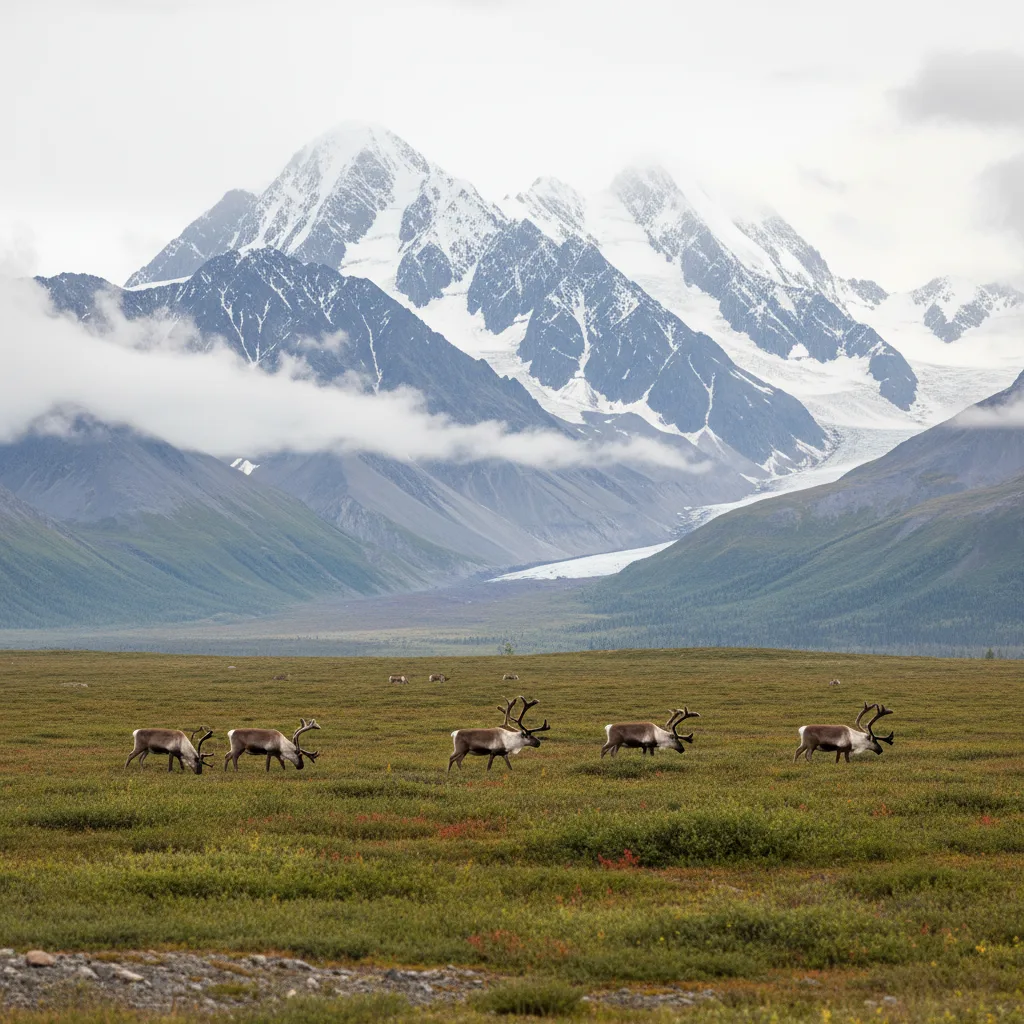
Summer is Alaska’s peak season for a reason, and it is not a consolation prize. These are the trips the long daylight makes possible:
- Denali National Park: the Denali Park Road shuttle operates from late May through mid-September. This is your only window for access to Wonder Lake and Kantishna. See our Denali area lodges.
- Kenai Fjords and glacier cruises: Seward day boats and multi-day trips run May through September. Glacier calving, humpback whales, orcas, puffins, and sea lions all line up in this window.
- Fishing: salmon runs peak between June and August depending on species. King salmon on the Kenai River runs late May through July; sockeye peaks mid-July; silvers come in August and September. See our Alaska fishing lodges page.
- Bear viewing: Katmai’s Brooks Falls salmon run peaks in July. This is the iconic image of bears catching jumping salmon and it only happens in this window. Our bear viewing page has the operators.
- Alaska Railroad: the Denali Star, Coastal Classic, and Hurricane Turn all run their full summer schedule. Midnight sun from the observation car is its own experience.
The common pattern for travelers who want both: plan a summer trip for Denali, the Kenai, and Katmai, and book a separate aurora trip in March or late September of a different year. Trying to do both in one week rarely works because the summer activities are at their best from mid-June through mid-August, which is exactly the period when the aurora is invisible.
Planning an aurora trip for the right season?
See our shortlist of aurora lodges across Fairbanks, Chena Hot Springs, and the Alaska Range for mid-September through March.
See aurora lodgesFAQs
Why can’t you see the northern lights in Alaska in summer?
Above 60 degrees north, the sky does not fully darken between mid-May and early August. The aurora is still active overhead but there is too much scattered sunlight for it to be visible to the naked eye or a camera. This is a physics constraint, not a weather one.
When is the earliest I can try for the aurora in Alaska?
Late August, roughly the 20th onward, in southcentral Alaska like Anchorage, Hatcher Pass, and Talkeetna. For a dedicated Fairbanks-based aurora trip, wait until mid-September when the interior has reliable full-dark nights from 11 p.m. to 2 a.m.
Can I see the midnight sun and the northern lights on the same trip?
No. The midnight sun and the aurora are opposite phenomena. The midnight sun means the sky is bright enough through the night that the aurora is invisible. For both, plan two trips in different seasons.
Do Alaska cruise itineraries include northern lights viewing?
Most Alaska cruises run May through September, which is the season when the aurora cannot be seen. A few late-September cruise departures exist that overlap the start of aurora season, but cruise routes usually stay in Southeast Alaska, where the aurora is weaker than in the interior. For serious aurora viewing, do not book a cruise.
Is there any way to photograph the aurora in Alaska during summer?
Not meaningfully. Even with long exposures, the scattered sunlight in the summer sky overwhelms the aurora’s faint glow. Professional aurora photography in Alaska starts in late August and runs through March.
What should I come to Alaska for in summer instead?
Denali, Kenai Fjords, the Kenai River salmon runs, Katmai brown bears at Brooks Falls, and the Alaska Railroad. Summer is also the only time to reach some Bush Alaska lodges by road or regular air service. The aurora is a separate trip.