TLDR
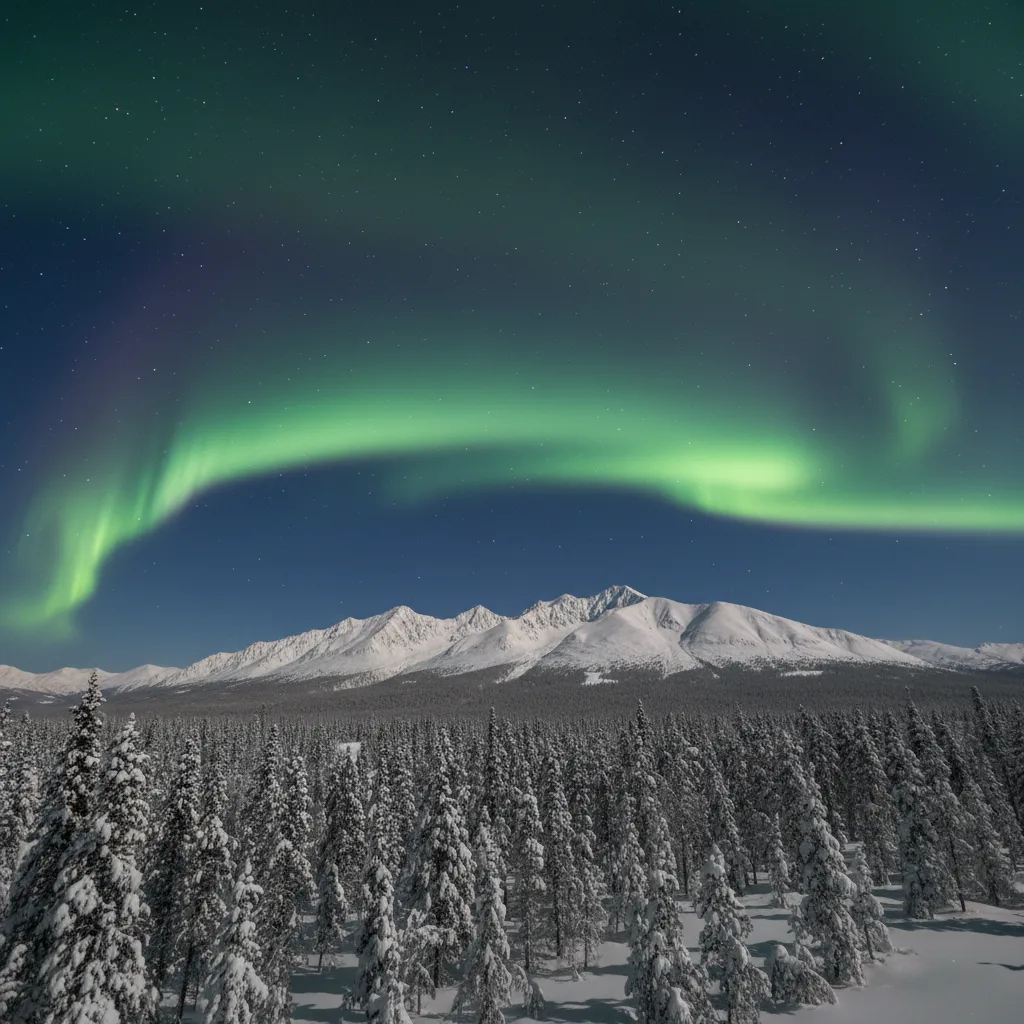
The best places to see the aurora in Alaska sit along an arc roughly from Fairbanks north to the Brooks Range. Three nights in the Fairbanks area gives you about a 90 percent chance of a sighting in season. If you want the most convenient trip, book Chena Hot Springs or Borealis Basecamp. If you want the statistical best, drive or fly the Dalton Highway to Coldfoot. Plan for late August through mid-April, between 11 p.m. and 2 a.m.
Insider Tip
Book three nights minimum, all in one area, and plan to stay up every night until 2 a.m. Two nights is the single biggest reason people leave Alaska without seeing the aurora. A single clouded night burns half your odds.
Most lists that rank “the best places to see the aurora in Alaska” quietly shuffle Fairbanks to the top and stop there. That is correct as far as it goes, but it is not the whole answer. Alaska gives you four genuinely different kinds of aurora trip, and the right one depends on how much darkness you can stomach, how far you want to drive, and whether you would rather be in a hot tub or an insulated parka when the sky goes green. This guide walks through the real locations, the lodges open in season, and the trade-offs between them, so you can pick one instead of hedging.
How the aurora actually works in Alaska
The aurora borealis is not a uniform band across the sky. It sits in a ring called the auroral oval, centered on the geomagnetic pole. That oval expands and contracts with solar activity. Alaska wins on two counts: the oval arcs directly across the state, roughly above the Alaska Range, and the state offers long winter darkness on top of that. The further north you go within Alaska, the deeper you sit inside the typical oval, and the more often the lights are directly overhead rather than hugging the horizon.
That sets up the core rule: Fairbanks is the default answer because it sits under the oval on most active nights, has a functioning airport and hotel economy, and has hours of darkness from early September onward. Anchorage, further south, sees the aurora less often and usually closer to the horizon, but it does see it. North of Fairbanks, up on the Dalton Highway past the Arctic Circle, the odds climb again, and so does the effort.
Season matters as much as latitude. Alaska’s aurora season runs roughly late August through mid-April. From mid-September to late April you have the full darkness window. Between mid-May and early August the sky never gets properly dark at Fairbanks latitude, so the aurora is physically there but invisible. For a practical planning purposes, the real viewing window is Labor Day to Easter.
Fairbanks and the Alaskan interior: the default answer
Fairbanks is the single most common answer to “where should I go to see the aurora in Alaska” for good reason. The city sits almost exactly under the center of the auroral oval on most active nights, it has a commercial airport with daily service from Anchorage and Seattle, and a 30-minute drive in almost any direction gets you away from the town’s light dome. Three nights in Fairbanks in season gives you roughly a 90 percent chance of seeing the lights, which is why almost every aurora itinerary in the state uses Fairbanks as the anchor.
Within the Fairbanks area, a few specific spots do the heavy lifting:
- Aurora Pointe (570 Funk Rd), 15 minutes from downtown. A dedicated warm viewing facility with a fireplace and coffee, no lodging on site. Useful for travelers staying in town who want a dark-sky pad without driving up a mountain road.
- Murphy Dome and Ester Dome, both short drives west of town. Both are high enough to sit above the river valley fog that occasionally settles over Fairbanks itself on clear cold nights.
- Cleary Summit, about 20 miles northeast on the Steese Highway. A long-standing local viewing spot, with the Alyeska Pipeline / Viewing Point nearby for daytime interest.
- Chena River State Recreation Area, on the Chena Hot Springs Road. A string of pullouts between Fairbanks and Chena Hot Springs with no ambient light at all.
For lodging, our Fairbanks area picks sort into three groups. In town, Pike’s Waterfront Lodge on the Chena River (1850 Hoselton Rd, 4.4 / 1,327 Google reviews) is the most polished option for travelers who want a real hotel and do not mind driving 15 or 20 minutes to a dark-sky pad. Out in the hills, A Taste of Alaska Lodge (551 Eberhardt Rd, 4.9 / 139) and Wilding Hotels Fairbanks (757 Forest Hollow Dr, 4.9 / 44) are small inns where you can walk out the door and watch. And for purpose-built aurora lodging, Borealis Basecamp (2640 Himalaya Rd, 4.4 / 547) sits on a ridge about an hour from the airport with 20 clear-roof fiberglass igloos and a newer set of aurora viewing cubes, specifically designed so you can watch the sky from bed.
Skip Fairbanks as your only aurora base if: you are traveling late May through mid-August (too much daylight), or you want a single-location trip where the hotel and the viewing spot are the same property. For the second case, Chena Hot Springs is the better answer.
Chena Hot Springs: the soak and watch option


Chena Hot Springs Resort sits 60 miles northeast of Fairbanks at the end of the Chena Hot Springs Road (17600 Chena Hot Springs Rd, 4.2 / 5,723 Google reviews). The drive from town takes about 90 minutes. It is the most popular single-location aurora property in the state, and for the simple reason that you can rotate between the geothermal rock pool and the viewing ridge without ever getting in a car. On active nights, staff run a Snowcoach up to the Aurora Observation Point on a nearby ridge so you can get above any tree line.
The complex is rustic, not polished. Rooms are functional motel-style, the food is cafeteria-plus, and mobile signal is thin. What you are paying for is the combination of minimal light pollution, the rock-lined hot springs pool open well after midnight, and the Aurora Ice Museum (17600 Chena Hot Springs Rd, 4.2 / 961), which is a year-round walk-in ice sculpture gallery with a bar. For many travelers, Chena is the single most enjoyable night of the trip even on clouded evenings, because the hot springs are good regardless.
Skip Chena if: you want hotel-grade amenities, a range of food options, or a shorter drive. The road is maintained in winter but it is a long quiet drive both ways.
Coldfoot and Wiseman: the Arctic Circle odds play

Coldfoot and Wiseman are two tiny settlements on the Dalton Highway, about 250 miles north of Fairbanks and 60 miles above the Arctic Circle. The drive is roughly six hours each way under good winter conditions; most travelers fly one leg on a small-plane charter from Fairbanks. For the statistically best odds in Alaska, this is the answer. Coldfoot sits closer to the center of the auroral oval than Fairbanks does, and the Brooks Range breaks up incoming weather so clear-sky nights are more common than on the coast.
Coldfoot Camp is a working truck-stop complex with rustic rooms, a cafeteria, and direct access to the auroral oval from the yard. Wiseman, 13 miles further north, is a historic mining settlement where a handful of local families run cabin rentals for aurora visitors. Both are off the grid in any normal sense. Expect basic rooms, generator power, and cold weather that is notable even by Alaskan standards. January overnight lows below minus 30 Fahrenheit are normal.
The case for going anyway is straightforward: you are paying with time and tolerance for cold, and what you get in return is the highest real-world probability of the sky filling up end to end. Most operators sell Coldfoot as a two-night add-on to a Fairbanks base, flying one direction and coach touring the other. That is the right shape for most travelers. A standalone four-night Coldfoot trip is only worth considering if the aurora is your entire reason for coming to Alaska, and you are willing to book with a full-service operator who handles the logistics.
Skip Coldfoot if: you are claustrophobic about small places, you want a polished hotel experience, or you are traveling with young children. The driving, the cold, and the amenity gap are all real.
Denali and Healy: aurora with the Alaska Range behind it

Denali is not the default aurora answer because most of the park lodges close mid-September when the main Denali Park Road service stops. What remains is worth knowing about, because aurora over the Alaska Range is visually different from aurora over flat interior tundra. You get the mountain silhouette in every frame.
The practical winter base is Healy, 11 miles north of the park entrance. A few properties stay open year-round, including smaller inns and cabin rentals. The aurora here shows further south in the sky than it does in Fairbanks, because the auroral oval sits north of the Alaska Range on most nights, so the lights usually arc over the mountains rather than directly overhead. On strong nights during a geomagnetic storm, that changes, and the arc can fill the whole dome above you. Our Denali area page lists which of the lodges take winter bookings and which are summer-only.
If you are driving the Parks Highway from Anchorage to Fairbanks in late September or early October, a one-night stop in Healy is an easy aurora add-on even if the main trip is a different shape. If you are already committed to three nights in Fairbanks, a separate Denali aurora night is not essential. Choose it for the photography or the scenery, not for better odds.
Anchorage, Talkeetna, and Hatcher Pass: the southcentral shoulder
Anchorage sits about 360 miles south of Fairbanks and 10 degrees of latitude south of the core auroral oval. On active-but-not-storm nights, you need to leave the city for a realistic chance, and even then the lights usually sit low on the northern horizon. The upside: southcentral Alaska has a slightly better shoulder-season window in mid-August to mid-September than the interior, because the nights get dark enough marginally sooner and the weather is often clearer before the deep winter cloud cycles set in.
The reasonable southcentral viewing bases are:
- Hatcher Pass Recreation Area, about 60 miles north of Anchorage. Good elevation, low light pollution, and a handful of small lodges including Snowhook Lodge with winter lodging and snowmachine rental.
- Eklutna Lake and the Glenn Highway pullouts, closer to town, quick to reach after a late flight from Seattle. Not statistically strong, but workable for a traveler who is already in Anchorage for other reasons.
- Talkeetna, about 2 hr 30 min north of Anchorage on the Parks Highway. Better latitude than Anchorage itself, small town, mountain backdrop, and several year-round cabin rentals.
The honest assessment is that southcentral Alaska is the right answer only if you are already coming through Anchorage for another reason, like a Kenai Peninsula fishing trip or a cruise shoulder. Our Anchorage area page covers the rest of the lodging picture. If the aurora is the whole reason for the trip, fly through Anchorage and keep going north.
The remote fly-in options: for enthusiasts and photographers
Beyond the road system, Alaska has a small number of fly-in aurora lodges that take one group at a time and do not share the sky with anyone. These are expensive, often four-figures per person per night, and they are worth it for a specific kind of traveler: someone who is coming specifically to photograph the aurora, or someone who has already done a Fairbanks aurora trip and wants the next tier.
- Iniakuk Lake Wilderness Lodge, in Gates of the Arctic National Park, 200 miles north of Fairbanks and 60 miles above the Arctic Circle. Fly-in only from Bettles. The main lodge and cabins use big picture windows, and the property takes one group at a time.
- Bettles Lodge, a historic roadhouse in the village of Bettles, 35 miles above the Arctic Circle, with scheduled small-plane service from Fairbanks.
- Arctic Hive Retreats, around 63 miles above the Arctic Circle, a small off-grid wellness retreat with yurts and a central lodge.
These are not substitutes for Fairbanks. They are the optional second stage of an Alaska aurora trip for people whose first one left them wanting more solitude. Our Bush Alaska page lists the fly-in lodges we track across the state.
When to go, month by month
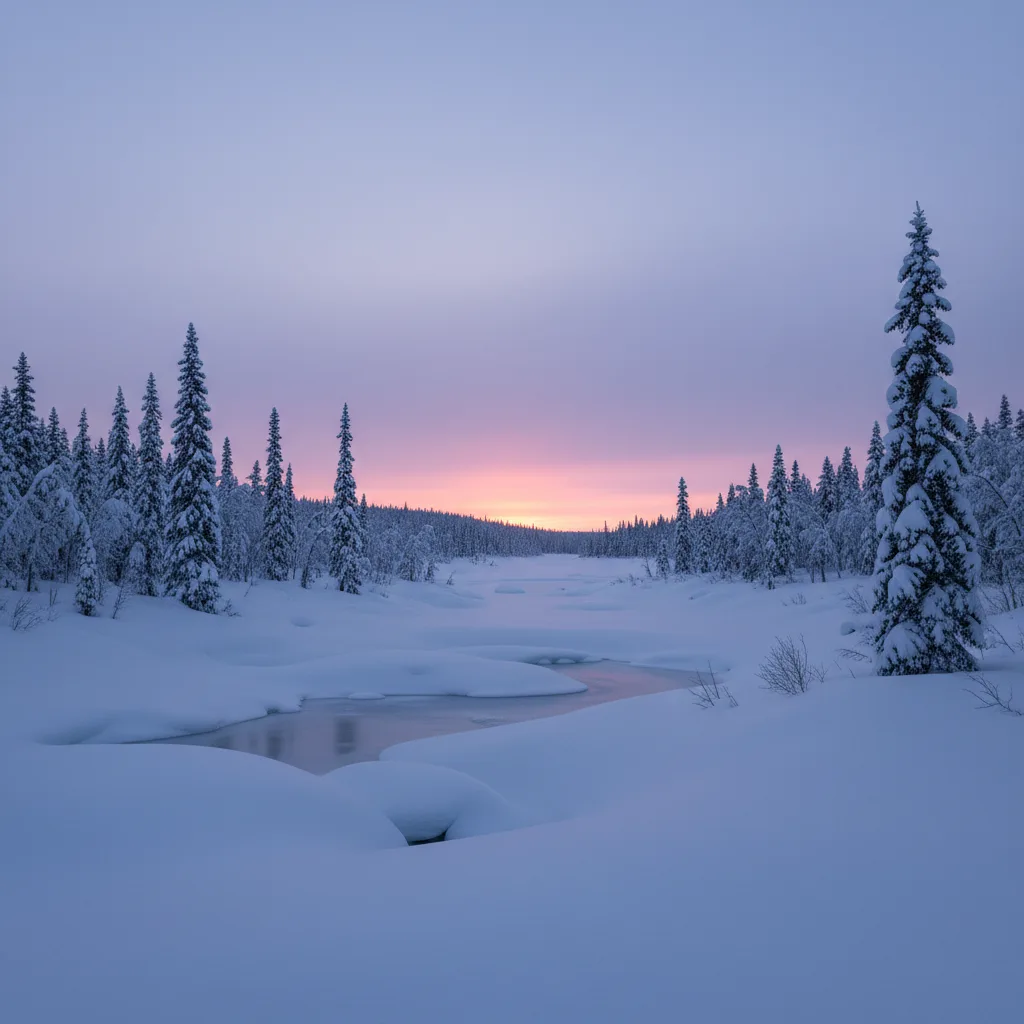
The aurora does not care what month it is, but darkness and weather do. This is the practical Alaska aurora calendar:
- Late August to mid-September. The earliest realistic southcentral window. Fairbanks still has ambient twilight late at night, but Anchorage and the Chugach are usable. Weather is usually mild and cabin rates have not spiked yet.
- Mid-September to late October. Interior Alaska opens up. Full dark nights, fall colors through the third week of September, and the autumn equinox is statistically one of the most active periods for geomagnetic activity. Roads are still clear of deep snow. Our pick for a first aurora trip.
- November to December. Deep cold sets in. Fairbanks is routinely below minus 20 Fahrenheit; Coldfoot can hit minus 40. The sky is typically very clear on the coldest nights because the cold air traps moisture out. Bring real gear.
- January to February. Peak winter. Shortest days, longest nights, coldest temperatures. Excellent odds if you are equipped for it. Dog mushing season begins, which some travelers pair with aurora nights.
- March. Often the sweet spot. Still plenty of darkness, clearer weather than deep winter, temperatures climb out of the extremes. Locals frequently recommend March as the single best month for first-time visitors.
- April. The closing window. By mid-month the nights are getting short again and the aurora season winds down. Prices drop, crowds drop, and the aurora is still regularly visible in the last two hours of true darkness.
- May to mid-August. Off-season. The sky does not get dark enough above 60 degrees north. Come for the fishing, the Denali shuttle, the Kenai Fjords; do not come for the aurora.
How to plan the trip
The planning side of an aurora trip has three pieces that most first-timers get wrong: length, forecasting, and gear.
Length. Three nights in one area, minimum. The 90 percent figure above assumes you are actually out from 11 p.m. to 2 a.m. each night. Cutting to two nights drops you toward a coin flip. Longer than three nights starts to hit diminishing returns on odds, but if your trip includes sled dog rides, ice fishing, hot springs, or a day flight over the Alaska Range, the extra nights earn their keep regardless.
Forecasting. Two sources actually matter. The University of Alaska Fairbanks Geophysical Institute aurora forecast gives a three-day regional outlook for Alaska specifically. NOAA’s Space Weather Prediction Center publishes short-term Kp index forecasts that update every half hour. As a rough rule, Kp 3 is the minimum for a confirmed-overhead view at Fairbanks latitude; Kp 5 or higher starts reaching Anchorage. Most phone apps that promise aurora alerts are repackaging these two feeds with varying degrees of usefulness.
Gear. The single biggest comfort investment is your boots and your base layer, not your jacket. Expect to stand still in minus 20 Fahrenheit for long stretches. Alaska outfitters rent extreme cold weather packages for about $50 to $75 a night. Hand warmers are cheap and necessary. A tripod is useful if you actually care about photographs; your phone will take a usable aurora shot in night mode, but only with a tripod, and a real camera with a 14mm to 24mm wide-angle lens is a different league.
Booking an aurora trip?
See our aurora lodge picks with glass-roof igloos, hot spring properties, and year-round cabins across the Fairbanks area and above the Arctic Circle.
See aurora lodgesSo where should you actually go?
If this is your first Alaska trip, book three nights in the Fairbanks area, splitting one night at Chena Hot Springs and two at a dark-sky property on the outskirts. If you want more than that, add two nights at Coldfoot. If the aurora is incidental to a larger Alaska trip through Denali or the Kenai, lock in at least one night in Healy or Talkeetna with clear aurora intent. If you are coming specifically to photograph, book an Arctic fly-in lodge after you have done Fairbanks once.
The single biggest mistake travelers make is treating the aurora as a one-night novelty attached to a cruise or a Denali bus tour. Give it three real nights, in the right season, at one of the locations above, and you will almost certainly see it.
FAQs
When is the best time of year to see the aurora in Alaska?
The aurora season runs late August through mid-April, with the strongest viewing window from mid-September to late April. Many guides pick March as the single best month because you get full darkness, clearer weather than deep winter, and temperatures that are cold but not extreme. September and late March are the shoulder picks; November to February are peak odds with peak cold.
Where in Alaska has the best chance of seeing the northern lights?
Fairbanks and the interior is the default answer, with a roughly 90 percent three-night success rate in season. For the highest statistical odds in the state, go further north to Coldfoot or Wiseman on the Dalton Highway, above the Arctic Circle, which sits closer to the center of the auroral oval. Anchorage and Southcentral Alaska see the aurora less often and usually closer to the northern horizon.
How many nights do I need to see the aurora?
Three nights minimum, all in the same region, between 11 p.m. and 2 a.m. each night. Three nights in Fairbanks gives you about a 90 percent chance of a sighting in season. Two nights is where most failed aurora trips happen, because a single cloudy night cuts your odds in half.
Can you see the northern lights in Alaska in summer?
Not really, above Fairbanks latitude. The aurora is still physically active in summer, but between mid-May and early August the sky at 64 degrees north does not get properly dark, so the lights are not visible. If you are specifically coming to Alaska for the aurora, plan for late August at the earliest. Summer in Alaska is for Denali, fishing, and the fjords, not the aurora.
Do you need a tour to see the aurora in Alaska?
No. If you are staying at a Fairbanks-area dark-sky property, a self-drive aurora trip with a rental car and a thermos works well. Tours make sense if you want a guided Coldfoot or Wiseman multi-night add-on, if you are not comfortable driving on winter roads, or if you want photography instruction. Expect to pay $100 to $250 per person per night for a guided small-group aurora tour out of Fairbanks.
Is Fairbanks or Anchorage better for the aurora?
Fairbanks, by a wide margin, if the aurora is the main reason for the trip. Fairbanks sits under the auroral oval on most active nights and has the lodging and viewing infrastructure built around it. Anchorage can work as a secondary option during late August and early September, or as part of a larger trip where the aurora is a bonus rather than the goal.
Is Chena Hot Springs worth the drive from Fairbanks?
Yes, for most travelers. It is 60 miles and about 90 minutes each way, and you get a rock-lined geothermal hot springs pool that stays open past midnight plus an on-site Aurora Observation Point. Even on clouded nights the hot springs and the Aurora Ice Museum are worth the trip. Skip it if you want hotel-grade food and amenities; the complex is deliberately rustic.
What should I pack for aurora viewing in Alaska?
Insulated winter boots rated to minus 40 Fahrenheit, a real down or synthetic parka, two base layers, an insulated mid-layer, a wool hat, and insulated gloves with liner gloves underneath. Hand warmers are cheap and essential. If you do not want to buy everything, Alaska outfitters rent extreme cold weather packages for about $50 to $75 per day. A tripod is required if you want any real photograph.